


« We promote equality, empowerment, and the exercise of rights for women and youth in Bolivia »
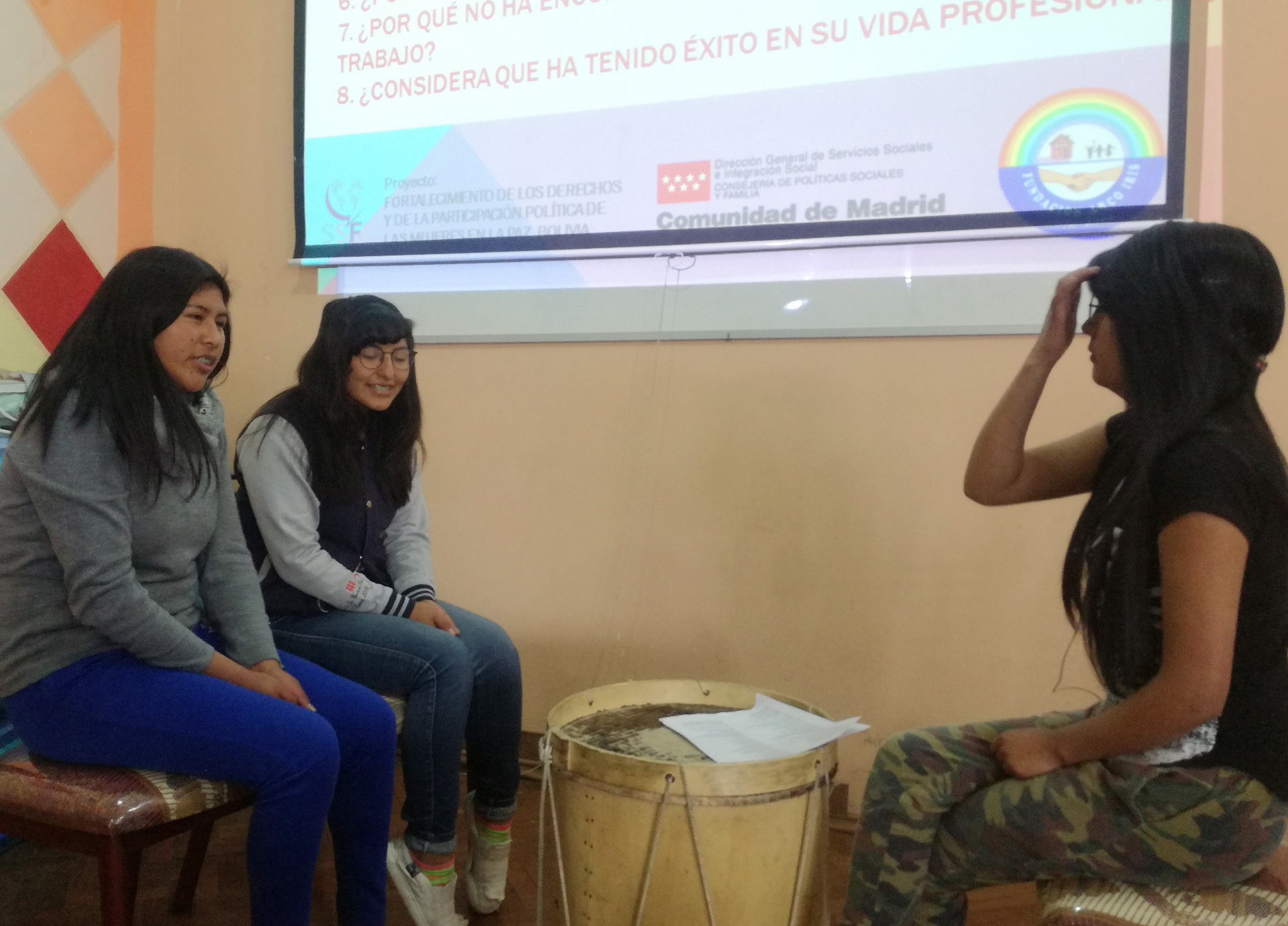
[2019 – 2020] PROJECT: Strengthening of women's rights and political participation in La Paz, Bolivia
»»»
Past projects
/Projects
o La Paz and El Alto, Bolivia
o Status: Completed Project (June 2021 – August 2022)
General Project Description
FORTAPAZ II was a project aimed at strengthening the economic autonomy and leadership of women and youth, cross-cuttingly integrating the prevention of gender-based violence as a key condition for the exercise of rights and social participation.
The project was implemented in the municipalities of La Paz and El Alto, providing continuity to the processes initiated in FORTAPAZ I and deepening the work on economic capacities, leadership, and violence prevention, using a gender and human rights approach adapted to local contexts.
What do we work on? / Our focus
During the implementation of FORTAPAZ II, actions were focused on:
• Strengthening the economic autonomy of women and youth.
• Capacity building for income generation and economic management.
• Training in personal finance as a basis for informed decision-making.
• Strengthening community leadership with a gender approach.
• Prevention of gender-based violence through educational and community processes.
• Promotion of social participation and networking.
Who do we work with?
The project was developed with:
• Adolescent, young, and adult women.
• Youth in situations of social and economic vulnerability.
• Community women leaders and youth representatives.
And in coordination with:
• Social and community organizations within the territory.
• Local public institutions linked to gender, youth, and social development.
• Allied entities committed to violence prevention and economic empowerment.
How did we implement it?
FORTAPAZ II was implemented through a training and community-based methodology, which combined:
• In-person workshops and experiential training spaces.
• Capacity building processes in economic autonomy and leadership.
• Spaces for reflection on gender, rights, and violence prevention.
• Support and guidance for individual and collective processes.
• Coordination with community and institutional networks.
The project emphasized the link between economic autonomy and the reduction of violence, promoting comprehensive and sustained processes over time.
Key results
Among the primary achievements of FORTAPAZ II, the following stand out:
• Strengthening of economic and leadership capacities in women and youth.
• Increased awareness and tools for the prevention of gender-based violence.
• Incorporation of personal finance practices for economic autonomy.
• Strengthening of community leadership committed to gender equality.
• Consolidation of local support networks and community coordination.
Lessons learned and contributions
FORTAPAZ II allowed for the identification of key lessons, including:
• The importance of addressing economic autonomy alongside violence prevention.
• The value of comprehensive educational processes over isolated actions.
• The need to strengthen local leadership for the sustainability of the processes.
• The relevance of community support in contexts of vulnerability.
These lessons contributed to the methodological evolution of the FORTAPAZ process and the design of subsequent interventions.
Continuity of the process
FORTAPAZ II provided continuity to FORTAPAZ I and laid the foundations for the development of FORTAPAZ III, progressively deepening the work on economic autonomy, leadership, and the empowerment of women and youth.
In this way, the project became a key stage of transition and consolidation within SSF Bolivia's FORTAPAZ line.